
What Credit Card Purchase Protection Really Covers
Learn what credit card purchase protection really covers and how smart U.S. consumers use it to reduce risk.
Before You Shop: Know Your Purchase Protection
Do you really know how purchase protection works — and what kinds of purchases it actually covers?
Purchase protection is one of the most misunderstood benefits in the American credit card system.
Many consumers see it as a secondary perk buried in cardmember agreements. That interpretation is wrong.
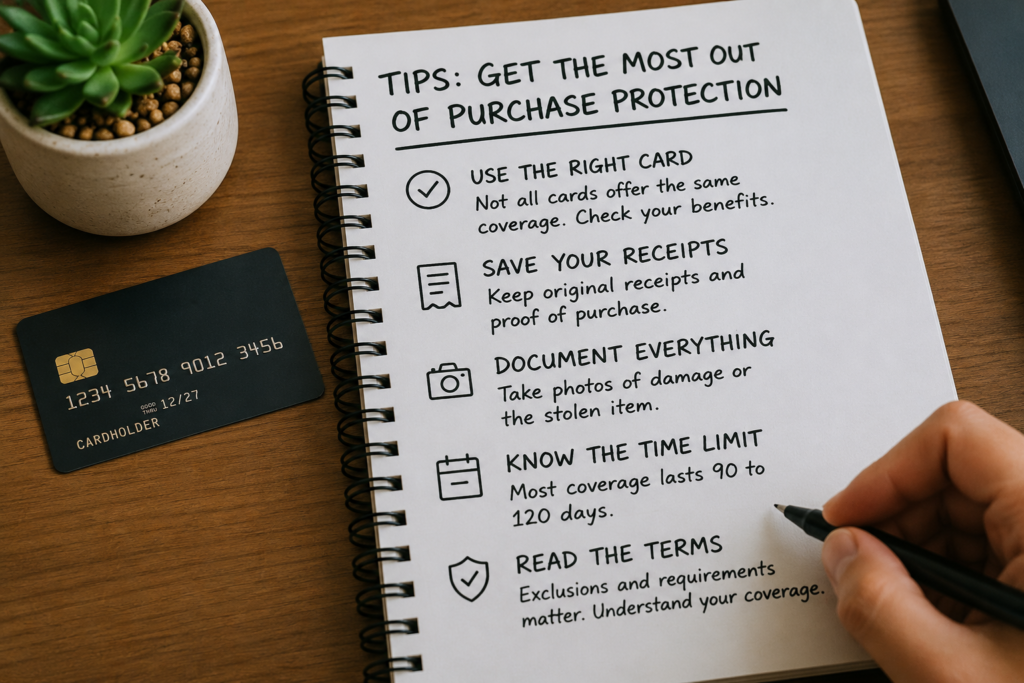
When used correctly, purchase protection works as a private risk-management tool designed to shield eligible purchases from financial loss during the period when newly purchased items are most vulnerable.
That includes protection against:
- theft
- accidental damage
- unexpected destruction
- certain qualifying loss events defined by issuer contracts
For financially disciplined consumers, this benefit is often more valuable than points, cashback, or travel perks.
The reason is simple: Rewards increase upside. Purchase protection reduces downside.
The Upside vs. Downside Calculator
Drag the slider to set a purchase price. See why protecting capital matters more than earning points.
A $30 reward means nothing if you absorb a $1,500 total loss.
And reducing downside is one of the most effective forms of financial control.
What purchase protection actually is
Purchase protection is contractual reimbursement attached to eligible credit card purchases.
If a covered item is stolen or accidentally damaged within a defined period after purchase, the issuer may reimburse repair costs, replacement cost, or the original purchase price, depending on policy language.
Most major U.S. issuers provide coverage windows between:
- 90 days
- 120 days
Premium products often include higher claim ceilings.
Some cards allow thousands of dollars per individual claim and significantly higher annual reimbursement caps.
That is not a convenience feature. It is financial protection architecture.
Coverage Scenario Tester
Select a scenario to see if a standard purchase protection policy would approve or deny the claim.
Purchase protection is often confused with other protections
Most Americans mistakenly group several protections together.
They are very different.
Fraud Protection
Protects unauthorized transactions made using stolen card credentials.
Chargeback Rights
Handles merchant disputes involving billing errors or failed delivery.
Purchase Protection
Protects purchased physical items after legitimate purchase.
This distinction matters.
If your card number is stolen, federal fraud protections apply.
If a merchant fails to ship an item, dispute procedures apply.
If your new laptop is stolen from your hotel room three weeks after purchase, purchase protection may apply.
Those are completely separate systems.
What purchase protection usually covers
Coverage terms vary by issuer, but eligible claims commonly include:
- accidental drops
- screen breakage
- liquid damage
- theft
- vandalism
- accidental destruction
Coverage examples often look like this:
The exact reimbursement depends on the agreement attached to the card product.
And this is where many consumers make mistakes: They assume all premium cards offer equivalent protection.
They do not. Contract language matters far more than branding.
What purchase protection usually excludes
This benefit is narrower than most people assume.
Claims are often denied because the purchase falls into excluded categories.
Common exclusions include:
- lost items
- gradual wear
- perishables
- used merchandise
- vehicles
- plants
- animals
- marketplace seller restrictions
- intentional misuse
Common claim denial triggers
- Split payment structures
- Unauthorized retailers
- Incomplete documentation
- Late filing deadlines
A consumer who says: “I lost the item. may trigger immediate denial.
A consumer who properly documents verified theft may qualify.
Precision matters.
Why documentation determines outcomes
Purchase protection claims are not casual customer service requests. They function like insurance reviews.
Most issuers require:
- itemized receipt
- card statement
- proof of purchase date
- photographs
- repair estimate when applicable
- police report for theft
- signed claim statement
The review process often includes outside administrators, payment network systems, and contracted claims specialists.
This is not simply “calling your bank.” It is structured underwriting review.
Consumers who keep organized records consistently perform better.
Disorganized consumers frequently hold excellent coverage they never successfully use.
Why this benefit matters more now
Modern commerce created new consumer risks.
Online shopping introduced:
- delivery theft
- fulfillment damage
- gray-market seller issues
- increased logistics errors
At the same time, issuers face growing claim abuse.
That has made approval standards stricter.
Documentation scrutiny is increasing.
Behavioral fraud detection systems are becoming more sophisticated.
The smartest way to use purchase protection
Sophisticated cardholders match purchase type to protection strength.
|
Best Protected Purchases Electronics Luxury Accessories Travel Equipment |
Low Priority Purchases Groceries Streaming Services Utilities |
This is not credit card optimization theater.
It is practical financial risk allocation.
Purchase protection does not replace extended warranty
Consumers often confuse these benefits.
They solve different problems.
Purchase Protection
Protects against early damage or theft after purchase.
Extended Warranty
Extends manufacturer warranty coverage later in the product lifecycle.
Strategic consumers use both.
Final perspective
Purchase protection is not decorative marketing language.
It is a functional private protection layer built into modern American credit infrastructure.
And in a financial environment shaped by:
- rising theft exposure
- growing delivery risk
- more online commerce
- stricter claims review
it matters more than ever.
The strongest credit card is not always the one earning the highest rewards.
Very often, it is the one that protects capital when something goes wrong.
Frequently Asked Questions

Related content
Balance transfers: how to break the debt cycle
Learn how balance transfers can reduce interest, organize debt, and help you break free from costly credit cycles.
Keep reading * You will remain on the current website